Can Movers Shift Heavy Appliances Like Washing Machines and Dishwashers?
Written by the Agarwal Packers and Movers team at our Dehradun office. About us

Can professional movers safely shift washing machines and dishwashers? Learn how these heavy appliances are prepared, disconnected, packed, moved and installed — and what you should check before moving day.
Yes, professional movers can generally shift heavy appliances such as washing machines and dishwashers.
However, these appliances require more than simply lifting them into a truck.
Washing machines contain moving internal components, while dishwashers have water connections, hoses and electrical connections that need to be handled carefully.
A safe appliance move usually involves several steps:
Disconnect → Prepare → Protect → Move → Secure → Reconnect
The exact services included depend on the moving company's package. Appliance disconnection or installation should not be assumed to be included unless it has been specifically confirmed.
Here's what you should know before moving these appliances.
Can Packers and Movers Move Washing Machines?
Yes.
Washing machines are commonly included in household relocations.
Whether you have a:
- Front-loading washing machine
- Top-loading washing machine
- Semi-automatic machine
- Fully automatic machine
- Washer-dryer combination
the moving team can generally handle the physical transportation.
The important part is preparing the machine properly before it is moved.
A washing machine contains a drum that can move during transportation. Improper handling can potentially cause damage to the appliance.
How Is a Washing Machine Prepared for Moving?
The preparation process generally starts with disconnecting the machine from its water and electrical connections.
The machine should then be:
- Emptied completely
- Disconnected from the water supply
- Disconnected from the electrical connection
Drained
Dried
Prepared for transportation
Protected with appropriate packing material
For front-loading machines, manufacturers commonly recommend securing the drum with transit bolts before transportation.
If you still have the original transit bolts, keep them available.
If you're unsure how your particular machine should be prepared, check the manufacturer's instructions rather than improvising.
Why Does a Washing Machine Need to Be Drained?
Even after the washing cycle finishes, water can remain inside:
Drain hoses
Filters
Pumps
Internal areas of the machine
If the machine is moved without proper draining, water can leak during handling or transportation.
Moisture can also damage packaging and nearby belongings.
Allow the machine to drain properly before it is packed.
If the appliance has been used shortly before moving day, give it enough time to dry.
What Are Transit Bolts?
Transit bolts are used on many front-loading washing machines to hold the drum securely during transportation.
The drum normally needs to move freely during operation.
During transportation, excessive movement can put stress on the machine.
Transit bolts help prevent that movement.
If your washing machine originally came with transit bolts, keep them in a safe place after installation.
If they are missing, don't simply use random hardware as a substitute.
Check the manufacturer's instructions or contact an authorised service professional for the correct solution.
Can Movers Disconnect a Washing Machine?
Sometimes, yes.
However, this depends on the service package and the mover's scope of work.
Physical moving and appliance installation are not always the same service.
Before booking, ask specifically:
"Does your service include washing machine disconnection and reconnection?"
If the answer is no, arrange an appliance technician separately.
This is particularly important if the machine is:
- Built into cabinetry
- Connected through a complicated plumbing arrangement
- Installed in a tight space
- Connected to specialised fittings
- Can Movers Shift Dishwashers?
Yes, dishwashers can also generally be transported during a household move.
However, they require careful preparation because they are connected to:
Water supply
Drainage
Electrical power
Some dishwashers are also integrated into kitchen cabinetry.
That can make removal considerably more complicated than moving a freestanding appliance.
Why Are Built-In Dishwashers More Complicated?
A freestanding dishwasher may be relatively straightforward to remove.
A built-in dishwasher can be secured inside a cabinet opening and may have:
- Mounting brackets
- Tight plumbing connections
- Electrical connections
- Drain hoses
- Cabinet panels
- Limited working space
Removing it incorrectly can damage either the dishwasher or the surrounding cabinetry.
If your dishwasher is integrated into your kitchen, mention this during the pre-move survey.
You may need an appliance technician or carpenter in addition to the moving team.
Should You Disconnect the Dishwasher Yourself?
It's better not to assume that you should.
If you are comfortable with basic appliance connections and the manufacturer's instructions allow it, you may be able to prepare a simple appliance yourself.
But water and electrical connections can create safety risks.
If you're unsure, have the appliance disconnected by a qualified technician.
The mover's primary responsibility is usually packing, handling and transportation, unless appliance disconnection has specifically been included in your service.
How Are Heavy Appliances Packed?
Heavy appliances need protection against:
Scratches
Dents
Impact
Dust
Moisture
Movement during transit
Depending on the appliance and service package, protective materials may include:
Stretch wrapping
Bubble wrap
Foam
- Corrugated sheets
- Protective blankets
- Corner protection
- Strong external packaging where required
The exact packing method depends on the appliance, its condition and the moving company's packing scope.
Should Appliances Be Packed in Their Original Boxes?
If you still have the original packaging, it can be useful.
Manufacturers design the original packaging specifically around the appliance.
However, keeping original boxes is not essential for every household move.
Professional movers may use alternative protective materials when the original packaging is unavailable.
For expensive or particularly delicate appliances, discuss the preferred packing method before moving day.
How Are Washing Machines and Dishwashers Loaded?
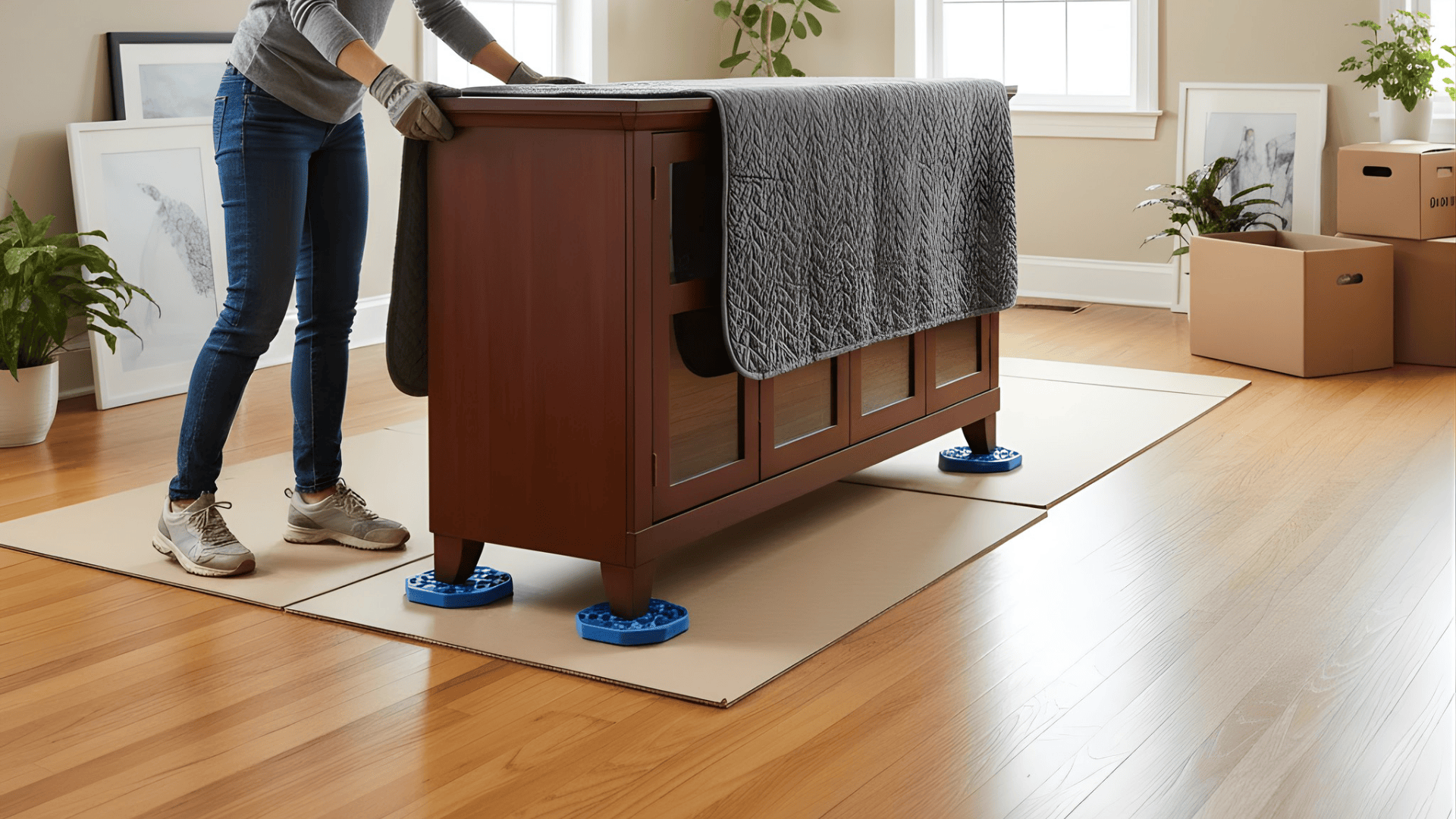
Heavy appliances should not simply be dragged across the floor and placed inside the truck.
The crew should plan the movement from the appliance's current location to the vehicle.
This may involve:
- Appliance movement equipment
- Protective blankets
- Controlled lifting
- Two-person or team handling
- Floor protection
- Careful positioning inside the vehicle
The route matters too.
A washing machine may be easy to move out of a ground-floor utility area but considerably harder to remove from an upper-floor apartment with a narrow staircase.
What If the Appliance Has to Go Downstairs?
Stairs can make heavy-appliance movement significantly more complicated.
Before moving day, check:
Staircase width
Landing space
Turns
- Doorway width
- Lift availability
- Appliance dimensions
Don't assume that because the appliance entered the property originally, it will automatically come out easily.
New cabinetry, doors or renovations may have changed the available clearance.
Can a Washing Machine Fit in a Lift?
Possibly, but this should be checked rather than assumed.
Measure both:
Appliance dimensions
and
Lift dimensions
Also consider the lift door opening.
A machine may technically fit inside the lift but still be difficult to manoeuvre through the door.
For apartment moves, inform the movers about the available lift and reserve the service lift if required by your society.
What About the Floor Under the Appliance?
Washing machines and dishwashers can be surprisingly difficult to move because they sit firmly on the floor.
Before moving them, the crew may need to create enough clearance to safely pull them out.
Protective material can also help prevent scratches on:
Tiles
Wooden flooring
Stone
Laminate
Kitchen flooring
This becomes particularly important when moving appliances from a finished kitchen or utility area.
What Should You Do With the Hoses and Cables?
Keep appliance accessories together.
For a washing machine, this may include:
- Water inlet hose
- Drain hose
- Power cable
- Transit bolts
- Installation accessories
For a dishwasher, keep:
- Water connection components
- Drain hose
- Power cable
- Mounting hardware
- Installation brackets
Put smaller parts in a labelled bag.
For example:
"Washing Machine – Installation Parts"
This makes reinstallation much easier at the destination.
Should the Door Be Left Open After Disconnecting?
For appliances such as washing machines and dishwashers, allowing the interior to dry before packing can help prevent trapped moisture and unpleasant odours.
Follow the manufacturer's instructions for storage and transportation.
Don't seal a wet appliance inside protective wrapping for an extended period.
Can Movers Install the Appliances at the New Home?
This depends entirely on the agreed service scope.
Moving companies may offer different levels of service.
One package may include:
Packing + Loading + Transportation + Unloading
Another may include:
Packing + Loading + Transportation + Unloading + Dismantling + Reassembly
Appliance installation can be a separate service.
For washing machines and dishwashers, plumbing and electrical connections should be handled appropriately rather than assuming the moving crew will perform them.
Ask before booking.
What About Refrigerators and Other Heavy Appliances?
The same general principle applies to other large appliances.
Movers may also handle:
Refrigerators
Freezers
Dryers
Ovens
Large televisions
Exercise equipment
However, each appliance has different preparation requirements.
For example, a refrigerator should generally be emptied and prepared appropriately before transportation.
Never assume that the preparation method for one appliance applies to another.
Does Moving Heavy Appliances Cost Extra?
Not necessarily.
A washing machine or dishwasher may simply be part of your normal household inventory.
However, additional charges may apply if the move requires services outside the standard package.
Examples could include:
- Difficult staircase handling
- Special equipment
- Appliance dismantling
- Built-in appliance removal
- Extra labour
- Long carrying distance
- Special packing
- Appliance technician services
Ask for these requirements to be identified during the quotation process.
How to Include Appliances in Your Moving Quote
When requesting a quote, don't just say:
"I have a 2BHK."
Mention your major appliances.
For example:
2BHK + 1 washing machine + 1 dishwasher + 1 refrigerator + 1 microwave + 2 TVs
This gives the moving company a better understanding of the household inventory.
Also mention whether the appliances are:
Freestanding
Built-in
- On upper floors
- Behind tight cabinetry
- Difficult to access
The more accurate the information, the more useful the quotation is likely to be.
Heavy Appliance Moving Checklist
Use this checklist before moving day:
Appliance
- Check Before Moving
- Washing machine
- Drain, disconnect and secure drum as required
Dishwasher
Disconnect water, drain and power appropriately
Refrigerator
Empty and prepare according to manufacturer guidance
Dryer
Disconnect utilities and protect drum/doors as applicable
Oven
Disconnect safely and check weight/access
Microwave
Remove trays and accessories
TV
Protect screen and pack securely
If you're unsure about the preparation of any appliance, consult its manufacturer or an appropriate technician.
What You Should Do on Moving Day
Before the movers arrive:
1. Empty the appliances
Remove clothes, dishes, food and other contents.
2. Separate accessories
Keep hoses, cables, bolts and small components together.
3. Keep manuals if available
They may be useful during reinstallation.
4. Tell the movers about built-in appliances
Don't let the crew discover complicated installation arrangements at the last minute.
5. Check the route
Make sure doors, gates and lifts are accessible.
6. Protect the destination
If the new appliance will be installed on finished flooring, consider appropriate floor protection during movement.
Common Mistakes to Avoid
Moving a Washing Machine Without Securing It
The internal drum can move during transportation. Follow the manufacturer's transportation instructions.
Forgetting to Drain the Appliance
Residual water can leak during handling.
Leaving Accessories Behind
Transit bolts, hoses and mounting parts can be difficult to replace later.
Assuming Installation Is Included
Always check whether disconnection and reconnection are part of your moving package.
Ignoring Built-In Appliances
Integrated dishwashers and other appliances may require specialised removal.
Underestimating Staircase Access
Measure difficult routes before moving day.
Giving Movers an Incomplete Inventory
Mention heavy appliances when requesting your quotation.
The Bottom Line
Yes, movers can generally shift heavy appliances such as washing machines and dishwashers, but safe transportation starts with proper preparation.
The most important things to clarify are:
- Who will disconnect the appliance?
- How will it be packed?
- Does it require special handling?
- Are transit components required?
- Will dismantling be needed?
- Who will reconnect it?
- Is installation included?
- Are difficult-access charges applicable?
For a straightforward freestanding appliance, moving may be relatively simple.
For a built-in dishwasher, upper-floor washing machine or appliance located behind tight cabinetry, the job can require considerably more planning.
The best approach is to mention every major appliance during your pre-move survey and get the exact scope of service confirmed before moving day.
Frequently Asked Questions
1. Can packers and movers move washing machines?
Yes. Washing machines are commonly included in household moves, provided they can be safely accessed and prepared for transportation.
2. Can movers transport dishwashers?
Yes. Dishwashers can generally be transported, although built-in models may require additional removal work.
3. Do movers disconnect washing machines?
Some moving packages may include appliance disconnection, while others do not. Confirm this before booking.
4. Do movers install washing machines at the new house?
Not necessarily. Reconnection and installation may be a separate service. Ask specifically whether it is included in your quotation.
5. Do washing machines need transit bolts when moved?
Many front-loading washing machines use transit bolts to secure the drum during transportation. Follow the manufacturer's instructions for your specific model.
6. Can a dishwasher be moved without removing it from the kitchen cabinet?
A built-in dishwasher normally needs to be properly removed from its cabinet opening before transportation. This may require specialised installation knowledge.
7. Can movers carry heavy appliances upstairs?
They may be able to, depending on the appliance, staircase, crew, equipment and safety conditions. Difficult staircase handling should be discussed during the survey.
8. Will moving a washing machine or dishwasher cost extra?
Not always. It depends on what is included in the moving package and whether special handling, dismantling, additional labour or technician services are required.
Moving Heavy Appliances in Dehradun?
Whether you're shifting locally in Dehradun or relocating to another city, proper preparation can make heavy-appliance transportation much safer and easier.
Agarwal Packers & Movers can help assess your household inventory, packing requirements and access conditions before the move.
📞 Call: +91 93681 08590 🌐 Visit: https://agarwalpackersnmovers.in
Book your FREE Home Survey & Quote and discuss your heavy appliances before moving day.
Related articles


Planning a move? These pages may help
Need packers and movers in Dehradun?
Free home survey and a written, binding quote — usually the same day.