How Are Oversized Mirrors and Glass Panels Transported Safely?
Written by the Agarwal Packers and Movers team at our Dehradun office. About us
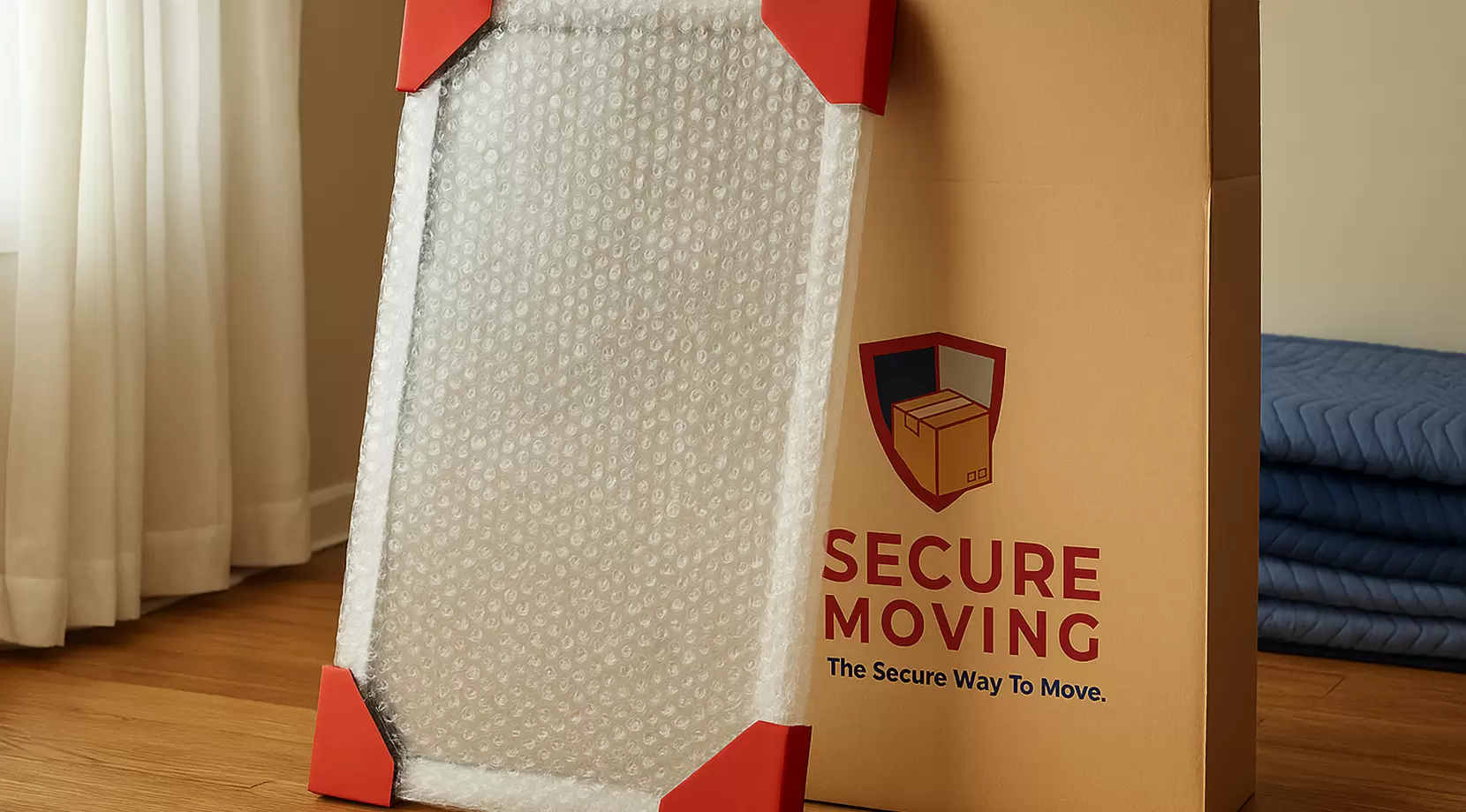
Oversized mirrors, glass tabletops and decorative glass panels need special care during a move. Learn how professionals assess, protect, pack and secure these fragile items to reduce the risk of cracks, scratches and breakage during transportation.
An oversized mirror can transform a room. A large glass tabletop can make a living space feel open, while decorative glass panels can add an elegant finish to a home.
But when it's time to move, these items present a different challenge from ordinary furniture.
Their size makes them difficult to handle, their edges can be vulnerable to impact, and even a small amount of movement during transit can increase the risk of damage. A mirror that fits perfectly on a bedroom wall may also be too large to pass through a staircase, doorway or lift without careful planning.
Transporting oversized mirrors and glass panels safely starts before packing. The item must be assessed, the route planned, suitable protective materials selected and the load secured correctly.
Here's how to prepare these delicate items for a household move.
1. Assess the Glass Before Moving It
The first step is to understand exactly what needs to be transported.
A framed dressing mirror, a frameless decorative panel and a thick glass dining tabletop have different handling requirements.
Before the move, check:
- Overall height, width and approximate weight
- Whether the glass is framed or frameless
- Whether it is attached to a wall or furniture
- Whether it has existing cracks, chips or loose fittings
- Whether it can be removed from its mounting safely
- Whether the item requires specialist handling
Measure the item at its widest and tallest points, including the frame or attached fittings.
For particularly large, heavy or permanently installed panels, consult a qualified glass installer or specialist mover. Some installations are not suitable for ordinary household packing and transportation.
2. Plan the Route Out of the Property
A mirror may be safely packed but still be impossible to move through a narrow hallway.
Before moving day, measure the route from the item's current position to the vehicle.
Check:
- Doorway widths and heights
- Corridor turns
- Staircase landings
- Lift dimensions
- Balcony or service access, where relevant and permitted
- Parking and loading access
Don't measure only the entrance door. A large panel may fit through the doorway but become trapped at a sharp turn.
If the item is wall-mounted, establish how it can be detached without damaging the glass or the wall. Do not attempt to remove a large fixed panel without suitable equipment and experience.
When the route is difficult, arrange a professional assessment in advance rather than discovering the problem while the moving crew is waiting.
3. Remove the Mirror or Glass Panel Correctly
If the item can be removed from its existing installation, it should be detached carefully before packing.
For a wall-mounted mirror, this may involve releasing brackets, clips or mounting hardware. Large panels can be heavy and may need multiple trained handlers or lifting equipment.
Keep the following precautions in mind:
Do not pull a mirror away from the wall without checking its mounting system.
Never lift a large glass panel by a loose frame or decorative edge.
Avoid twisting or bending the panel while handling it.
Keep fingers clear of pinch points.
Use appropriate protective equipment and glass-handling tools.
Have a qualified installer handle fixed or complex installations.
If the panel is bonded to a wall or forms part of a built-in structure, professional removal may be necessary.
Store the mounting hardware in a labelled bag so it can be identified when the item is reinstalled.
4. Protect the Corners and Edges First
Corners and edges are especially vulnerable to knocks during handling.
Before wrapping the full surface, use suitable protective corner guards and edge protection designed for the item's size and type.
A typical protection plan may include:
- Foam or purpose-made corner protectors
- Edge guards
- Non-abrasive surface protection
- Protective padding
- A rigid outer layer or purpose-built crate, where appropriate
The materials should cushion the glass without placing concentrated pressure on its edges.
Avoid using rough materials directly against a mirror's reflective coating or decorative finish. Adhesive tape should not be applied directly to the glass or mirror backing unless the manufacturer confirms that it is safe.
For valuable, antique or unusually shaped mirrors, specialist packing is a better choice than improvising with ordinary cardboard.
5. Use Suitable Packing Materials
The right packing materials depend on the glass type, dimensions, frame and journey.
Common materials used for protecting mirrors and glass panels include:
<box gap={3}> <row align=start gap={3}> <AsyncImage query="foam corner protectors on large framed mirror moving preparation close up" aspectRatio="3:4" maxWidth="112px" /> <box flex="1" gap={1}> **Corner and edge guards**
Help protect vulnerable edges from knocks and accidental contact with other objects. </box>
</row> <divider color="subtle" /> <row align=start gap={3}> <AsyncImage query="large mirror wrapped in soft protective foam sheet during professional moving packing" aspectRatio="3:4" maxWidth="112px" /> <box flex="1" gap={1}> **Soft protective layers**
Reduce surface scratches and minor abrasion when the material is appropriate for the finish. </box>
</row> <divider color="subtle" /> <row align=start gap={3}> <AsyncImage query="large rectangular mirror packed inside custom rigid cardboard protective moving box" aspectRatio="3:4" maxWidth="112px" /> <box flex="1" gap={1}> **Rigid protective packaging**
Helps shield the panel from contact and handling impacts when correctly sized and secured. </box>
</row> <divider color="subtle" /> <row align=start gap={3}> <AsyncImage query="large glass panel secured upright in professional padded A frame transport rack" aspectRatio="3:4" maxWidth="112px" /> <box flex="1" gap={1}> **Purpose-built glass racks or crates**
Can support large panels during handling and transit when designed for the item's weight and dimensions. </box>
</row> </box>
The goal is to prevent direct contact with hard surfaces, protect vulnerable edges and stop the panel from shifting.
More wrapping does not automatically mean more safety. A badly fitted package can allow movement or put pressure in the wrong places.
6. Keep the Panel Properly Supported
Oversized glass should be supported in a way that suits its design and manufacturer guidance.
Large flat panels are commonly transported upright on a suitable A-frame or purpose-built rack, with appropriate padding and restraints. The rack must be designed for the panel's size and weight.
However, the correct method depends on the glass type and its packaging. Some framed mirrors or glass components may have different support requirements.
A few important precautions:
Never assume that an ordinary cardboard box is enough for a very large panel.
Do not allow unsupported glass to flex.
Avoid resting the full weight on an unprotected corner or edge.
Keep glass separated from heavy furniture and other hard objects.
Use suitable restraints without overtightening them.
Follow any manufacturer-specific transport instructions.
If a panel is cracked or chipped, do not treat it like an ordinary fragile item. Have it assessed by a qualified professional before deciding whether it can be moved safely.
7. Secure the Glass During Transportation
Even carefully packed glass can be damaged if it shifts inside the vehicle.
Before loading, the crew should check that the package or rack is appropriate for the panel and the transport vehicle.
During transit, the item should be secured to prevent sliding, tipping and contact with other cargo.
This means:
- Using a suitable rack or support system
- Applying compatible padding at contact points
- Securing the rack or package to approved vehicle anchoring points
- Keeping heavy objects away from the glass
- Preventing other cartons from pressing against it
- Checking that straps do not create excessive pressure
Avoid placing loose household boxes against a glass panel simply because space is available.
For large or high-value panels, ask the moving company whether it uses specialist glass-handling equipment or recommends a dedicated service.
8. Label the Package Clearly
Labels help the crew recognise the shipment and handle it appropriately.
Useful markings may include:
FRAGILE
GLASS
- HANDLE WITH CARE
- KEEP UPRIGHT, where appropriate
- THIS SIDE UP, where relevant
Labels are reminders, not substitutes for proper packaging. A panel still needs suitable protection and secure support.
Record the mirror or panel in the moving inventory, and take photographs of its condition before packing. This is particularly useful for expensive mirrors, custom-cut panels and decorative pieces.
9. Prepare the New Home Before Delivery
Transporting the item is only half the job. The destination should also be ready to receive it.
Before delivery, check:
- The intended installation location
- Doorway and lift access
- Whether furniture needs to be moved out of the way
- Whether the wall mounting is ready
- Whether the installer will be present
- Whether the panel can be safely carried through the property
For a large bathroom mirror or decorative glass panel, make sure the installation area is clear before the delivery crew arrives.
If the item needs professional mounting, schedule the installer separately unless the moving company has explicitly confirmed that installation is included.
10. Inspect the Glass After Delivery
Once the item reaches the destination, inspect it carefully before signing off on the delivery where possible.
Check for:
- Cracks or chips along the edges
- Scratches on the surface
- Damage to the frame
- Loose fittings
- Signs of pressure or impact
- Damage to the reflective backing, where visible
Take photographs of any concerns and notify the moving company promptly in writing. Keep the packing materials until you've confirmed the item is in acceptable condition, if practical.
If you notice damage, follow the company's claim process and any applicable transit-protection policy.
Do not attempt to install a cracked or structurally damaged glass panel. Have it assessed by a qualified professional.
Should You Move Oversized Mirrors Yourself or Hire Professionals?
The decision depends on the panel's size, weight, value, installation and your experience handling fragile objects.
Factor
- DIY Move
- Professional Assistance
- Small, easily handled framed mirror
- May be manageable with suitable protection
- Useful if the item is valuable or delicate
- Oversized full-length mirror
- Can be difficult to control safely
- Better for coordinated handling and suitable packing
- Heavy glass tabletop
- Requires careful handling and adequate support
- Helpful for lifting, padding and secure transport
- Fixed or bonded glass panel
- Removal can be hazardous
- Specialist assessment and removal are advisable
- Antique or custom-cut mirror
- Higher risk of accidental damage
- Specialist packing may be the safer choice
If you choose to move a small mirror yourself, use suitable protection, avoid carrying it alone if it is awkward or heavy, and never handle damaged glass without appropriate expertise.
For very large, heavy or fixed panels, professional handling is generally the safer option.
Common Mistakes to Avoid
Using only a blanket: A blanket may reduce surface abrasion but may not provide enough edge protection or structural support.
Applying tape directly to the mirror: Adhesive can damage some finishes or leave residue. Use a suitable packing method instead.
Carrying a large panel alone: Oversized glass can be difficult to control, increasing the risk of injury and breakage.
Placing glass flat without checking its support requirements: Incorrect support can create stress or allow the panel to flex.
Leaving gaps inside the package: Excessive movement can increase the risk of impact damage.
Assuming fragile labels are enough: Labels cannot replace proper packing, handling and restraints.
Forgetting to measure the route: A packed mirror still needs to fit through every doorway and turn on the way out and into the new home.
Frequently Asked Questions
1. Can packers and movers transport oversized mirrors?
Some moving companies can transport oversized mirrors, but the service depends on the dimensions, weight, installation and available equipment. Share the measurements and photographs before booking so the company can assess the requirements.
2. Should a large mirror be transported flat or upright?
Large glass panels are often transported upright on a suitable, properly padded rack, but the correct orientation depends on the glass construction, packaging and manufacturer guidance. Ask the handler to confirm the appropriate method for your particular item.
3. How do I protect the corners of a large mirror?
Use suitable corner guards and edge protection, followed by appropriate surface padding and rigid packaging where needed. Avoid placing pressure directly on exposed corners.
4. Can a wall-mounted glass panel be removed by regular movers?
It depends on how the panel is attached. A removable mirror may be within a mover's scope, while bonded, heavy or complex installations may require a qualified glass installer.
5. Does transit insurance cover a broken mirror?
Coverage depends on the applicable policy, declared value, exclusions and circumstances of the damage. Confirm the terms before the move and ask how fragile or high-value items should be documented.
6. What details should I give movers before booking?
Share the item's height, width, approximate weight, frame type, installation method, existing condition, pickup access and destination access. Photographs are useful for an initial assessment.
7. Can a glass tabletop be transported with other household furniture?
It may be possible if it is properly protected, supported and separated from other cargo. The packing and loading arrangement should prevent shifting, impact and pressure from heavier objects.
Moving Oversized Mirrors in Dehradun?
Large mirrors and glass panels deserve more than ordinary household packing. Careful assessment, appropriate edge protection, secure transport and advance route planning can help reduce the risk of damage.
Agarwal Packers & Movers can discuss your household relocation requirements, including fragile items that may need special handling.
📞 Call: +91 93681 08590 🌐 Visit: https://agarwalpackersnmovers.in
Book your FREE Home Survey & Quote and mention your oversized mirrors or glass panels before moving day.
Related articles


Planning a move? These pages may help
Need packers and movers in Dehradun?
Free home survey and a written, binding quote — usually the same day.